
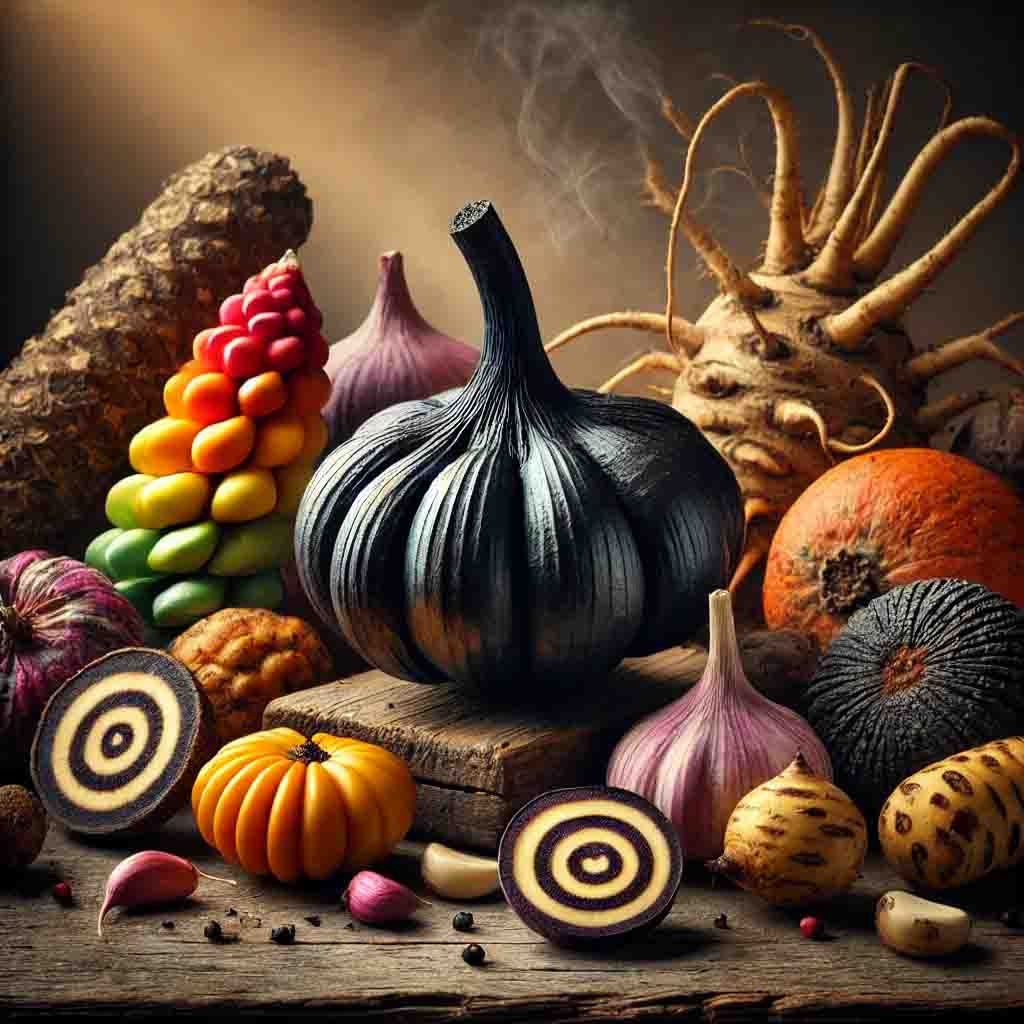
Discover Black Garlic Benefits and 5 Exotic Root Vegetables (with recipes)

Approximate reading time – 13 minutes
Did you know that black garlic contains twice the antioxidant power of regular garlic? This transformed superfood leads our exploration of extraordinary root vegetables that can revolutionize your wellness journey. As I discussed in my recent article on 5 Aspects of Holistic Health for Beginners: 2025 Complete Guide, physical wellness forms the cornerstone of overall health, and these underground treasures can transform both your nutrition and culinary adventures.
Black Garlic Benefits: A Powerhouse of Health Benefits
Black garlic, created through a careful aging process, stands at the forefront of nutrient-dense foods. During the aging process, regular garlic undergoes a remarkable transformation that enhances its nutritional profile and creates a complex sweet-umami flavor. Research indicates that this transformation produces powerful compounds that support:
- Doubled antioxidant levels for enhanced immune function
- Improved cardiovascular health and blood pressure regulation
- Better blood sugar management
- Increased cellular protection against oxidative stress
- Reduced inflammation throughout the body
- Enhanced digestibility compared to raw garlic
- Improved liver function and detoxification support
Creating Your Own Black Garlic at Home
While black garlic is available commercially, making it at home ensures the highest quality and freshness. Here are several methods to create your own black garlic, each with its unique advantages:
1. Rice Cooker Method
The most accessible method for most home cooks.
- Use the “warm” setting to maintain constant temperature
- Wrap garlic bulbs in parchment paper
- Keep lid closed for 3-4 weeks
- Pros: Easy setup, no special equipment needed
- Cons: May produce strong odor, less precise temperature control
2. Sous Vide Method

Perfect for precise temperature control.
- Set sous vide to 140-170°F
- Vacuum seal garlic bulbs
- Ferment in water bath for 21-28 days
- Pros: Precise control, minimal odor, consistent results
- Cons: Requires specialized equipment, higher energy use
3. Fermentation Box Method
Ideal for serious fermenters.
- Use specialized or DIY fermentation box
- Set temperature to 140-170°F
- Monitor humidity levels
- Pros: Precise temperature and humidity control
- Cons: Requires specialized equipment
4. Slow Cooker Method
A convenient option using common kitchen equipment.
- Use “keep warm